Themed Posters
It all started in the middle of a big confusion. Around 2015, the market was faced with a jumble of standards claiming to ensure animal welfare in the down business. The real trigger was a mix of growing NGO pressure over cruelty and lack of transparency, the absence of traceability, rising consumer demand for ethical supply chains, and brands keen to avoid reputational risk. All of that converged in 2014–2015, sparking the launch and adoption of standards like the Responsible Down Standard and the Global Traceable Down Standard.
We couldn’t just watch from the sidelines — we felt compelled to dig deeper, help people understand the options, and most importantly, show how to get involved and actively engage with these standards. Today we’re mapping the fast-moving policy landscape of the EU Green Deal together with Ohana Public Affairs from Brussels. And together with EOCA, we’re diving into what it means to become Nature Positive.
That’s how the posters began.
We take the messy, tangled stuff and make it simple — so in a single glance, the connections are clear and the story makes sense.
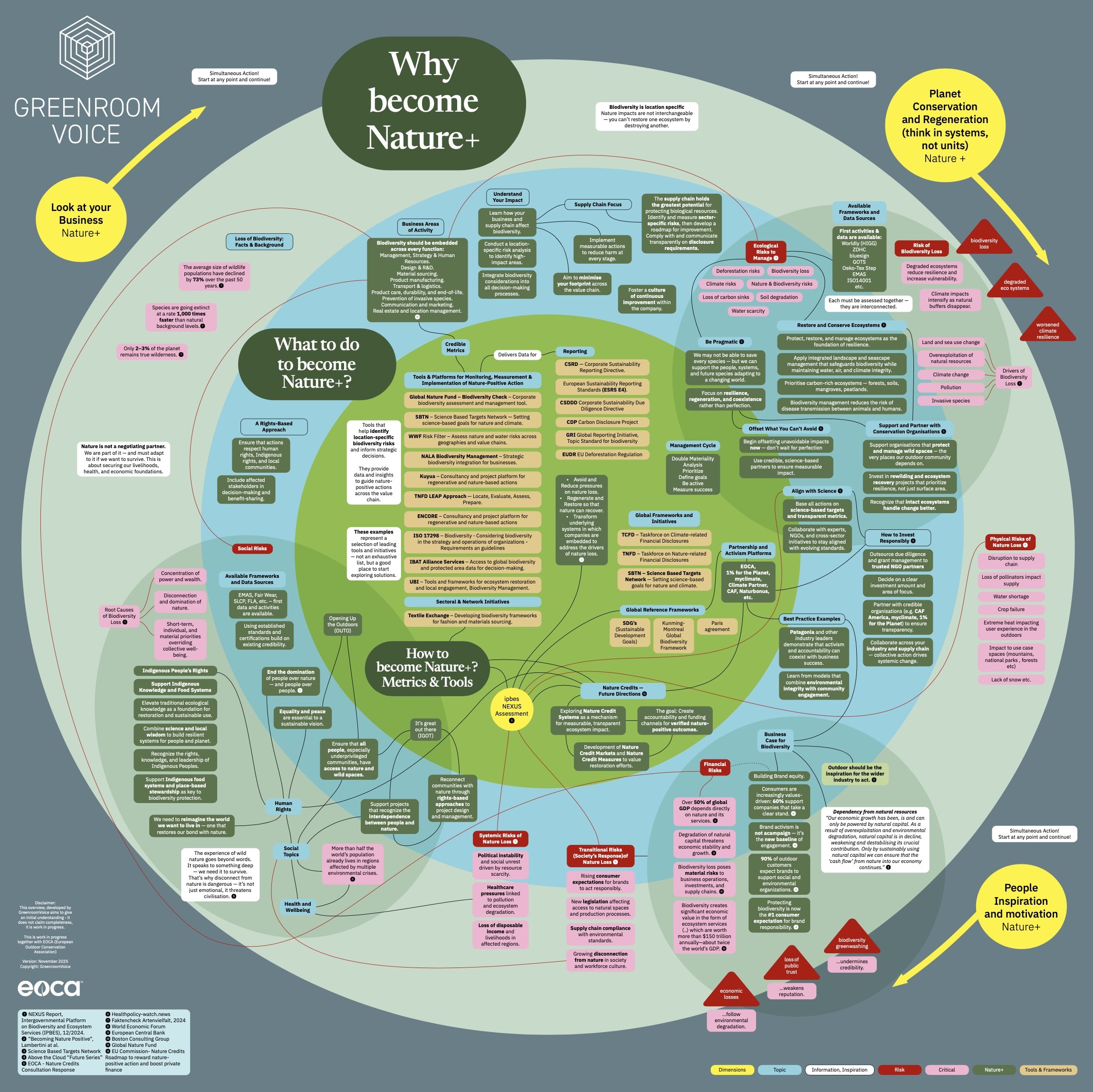
A mind map to becoming Nature+
If you can’t read everything on this poster—don’t worry! It’s designed to be big.
Just send us an email and we’ll happily provide the full PDF so you can explore it in your own time.
There’s no single “right” way to dive into the content. You can start anywhere and follow the connections—every element is linked to the next. You can also use the three main rings as your guide:
1. Why become Nature+?
This outer layer lays the groundwork: key facts, context, and reasons why becoming Nature+ matters. It’s a great resource if you need to explain or advocate for the importance of nature-positive action.
2. What to do to become Nature+?
Here you’ll find the structural information and practical steps that help you understand where to start and how to move forward.
3. How to become Nature+ – Metrics & Tools
At the center are the tools and methodologies that support your journey toward becoming nature positive. All of this is grounded in the scientific foundations of the IPBES report.
If you have any questions, we’re here to help.
Enjoy exploring—this journey is meant to inspire you.

Untangling the EU
In the wake of Covid, the first wave of EU Green Deal legislation hit the textile industry. For many, it was overwhelming: an industry that had long been unregulated suddenly faced a flood of new requirements.
When we looked for a simple, comprehensive overview, we couldn’t find one. So we created it ourselves — digging through the European Commission’s website, connecting the dots, and mapping the context, the applications, and the laws.
Before publishing, we asked our friends at Ohana Public Affairs to review and refine it. Since then, together with Ohana, we’ve kept the overview up to date — and you can always find the latest version right here.
We love posters…
-
Don't le me down!
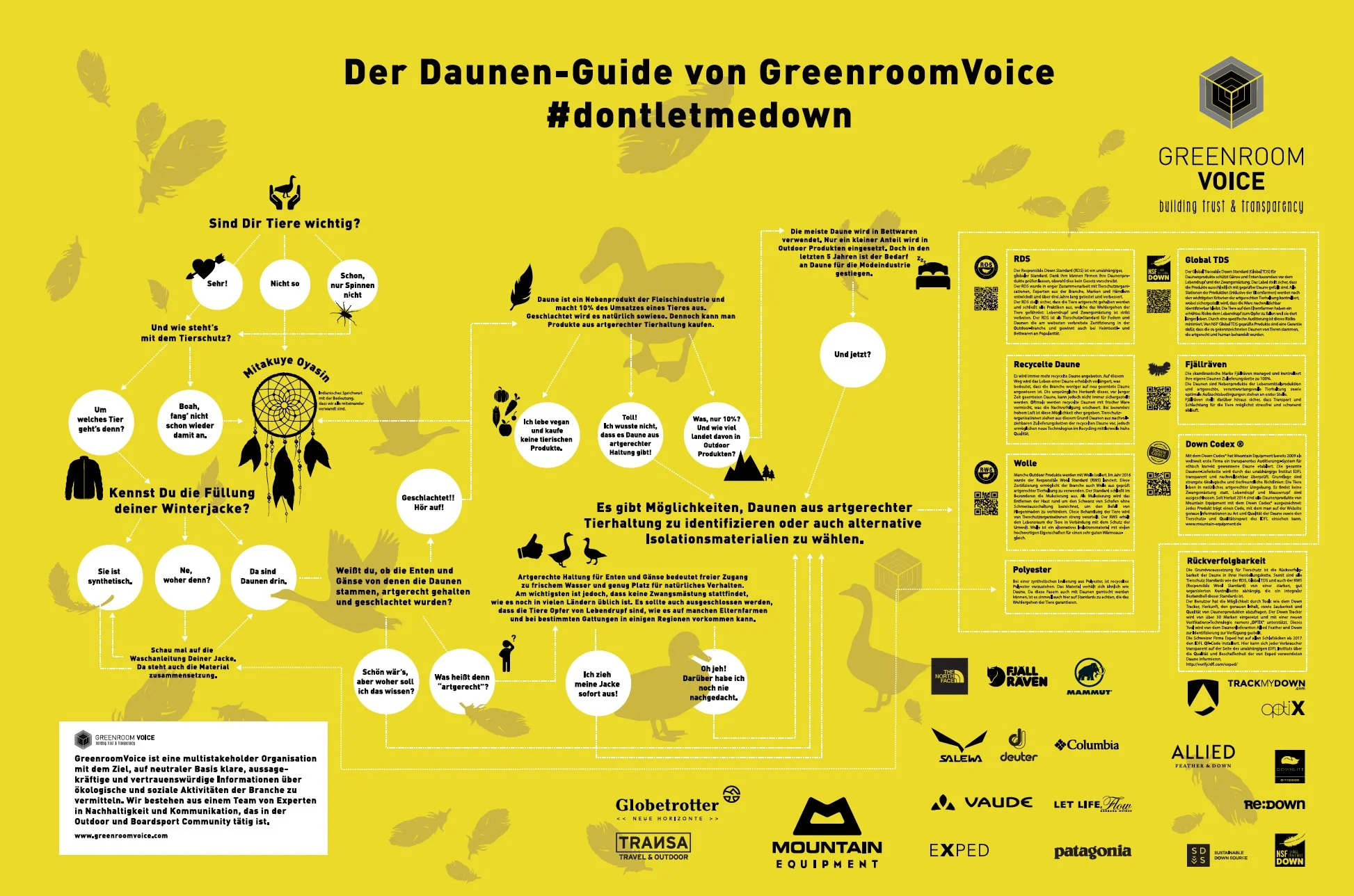
When cruelty concerns, transparency gaps, and reputational risks collided in 2014–2015, the down industry introduced new standards like RDS and GTDS. But each came with different scopes and implications. Through research and stakeholder interviews, we built a consumer-friendly mind map — sponsored by leading brands and displayed in hundreds of climbing gyms across Germany. It even made its way into the MK&G Museum’s ‘Fast Fashion’ exhibition in Hamburg Germany.
-
Bio-Based/ Biodegradable?
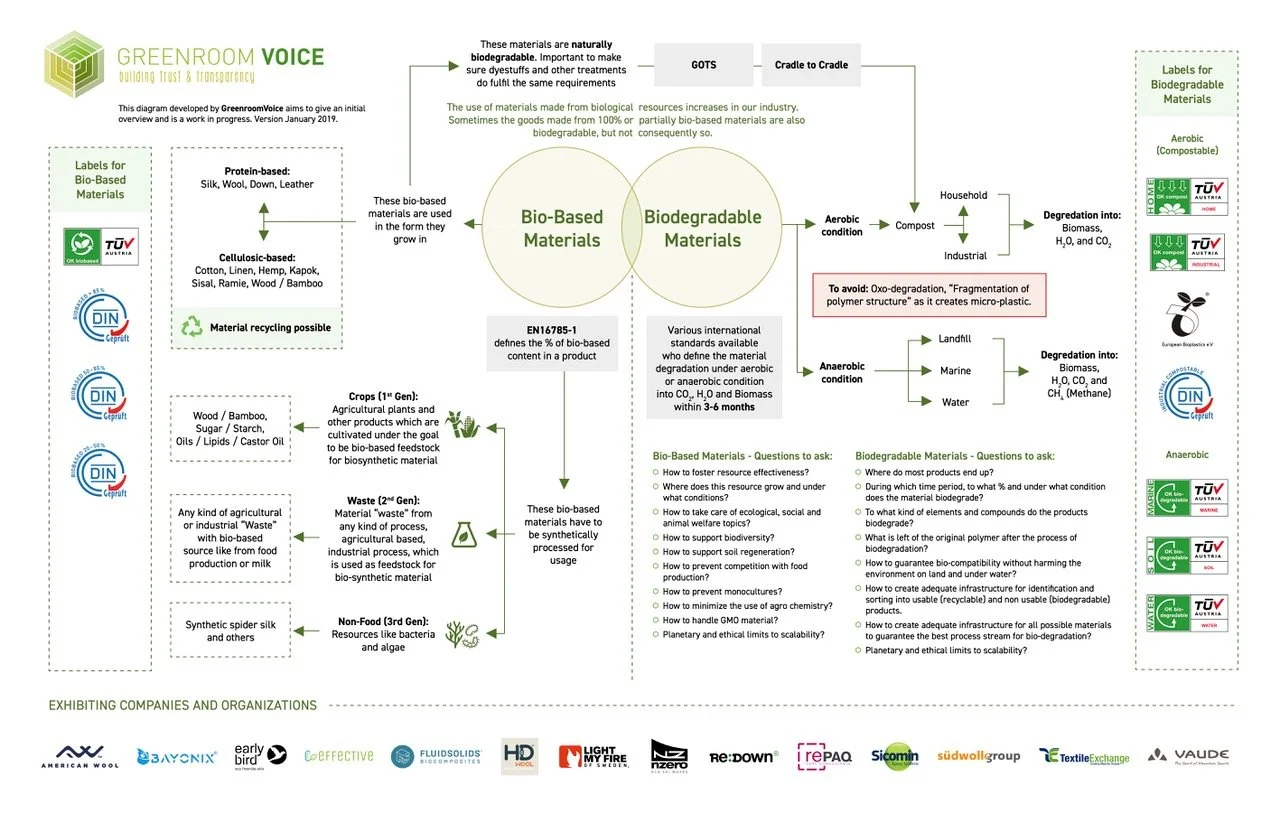
Then came the wave of bio-based materials. Exciting, promising, full of potential. But with it, a new debate: if it’s bio-based, does that mean it’s biodegradable? Suddenly the words became a minefield — mixed up, misunderstood, misused. That’s when we decided to dig deeper, do the research, and put it all on paper — to bring clarity where there was confusion.